If your credit card balance is starting to feel like a second rent payment, welcome to the most unfun club in personal finance. Balance transfer cards can help, but only if you use them like a cleanup tool and not like a fresh start with better branding.
For US readers ages 18 to 25, this matters because high-interest debt can snowball fast when you are still building income and credit habits. The good news is that 2026 still has solid 0% intro APR offers, but the fine print is where the real story lives.
The thing nobody actually says out loud
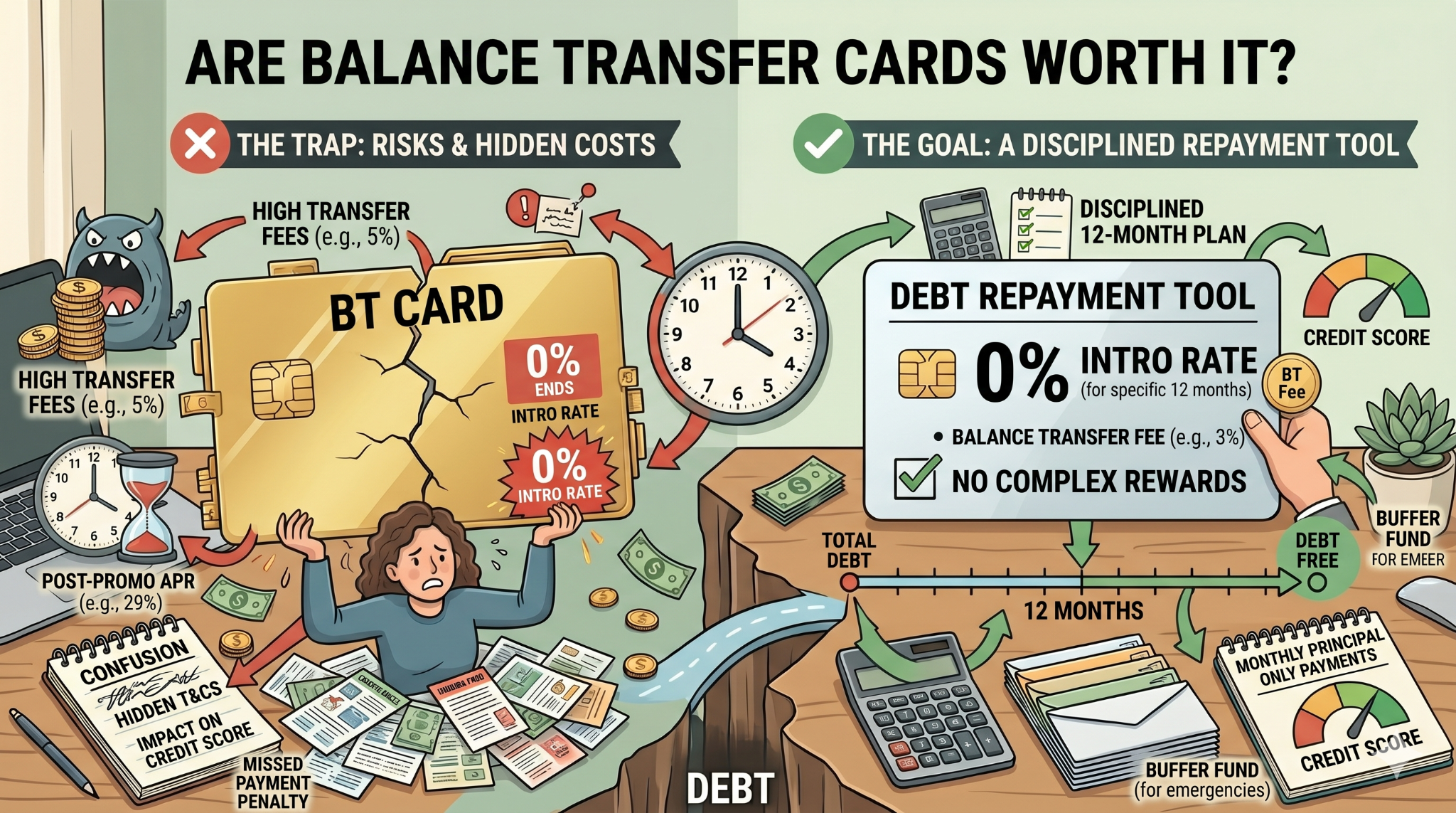
A balance transfer card is not debt relief. It is time relief. That distinction matters because time is useful only if you use it to actually pay down the balance instead of just moving it to a prettier card.
The best cards in 2026 are the ones that buy you the longest 0% intro APR window without sneaking in a fee structure that makes the deal less helpful than it looks. CNBC, Bankrate, Forbes, and Credit Karma all keep pointing to cards like Wells Fargo Reflect, U.S. Bank Shield, BankAmericard, Citi Simplicity, and Citi Diamond Preferred because they combine long intro APR periods with no annual fee.
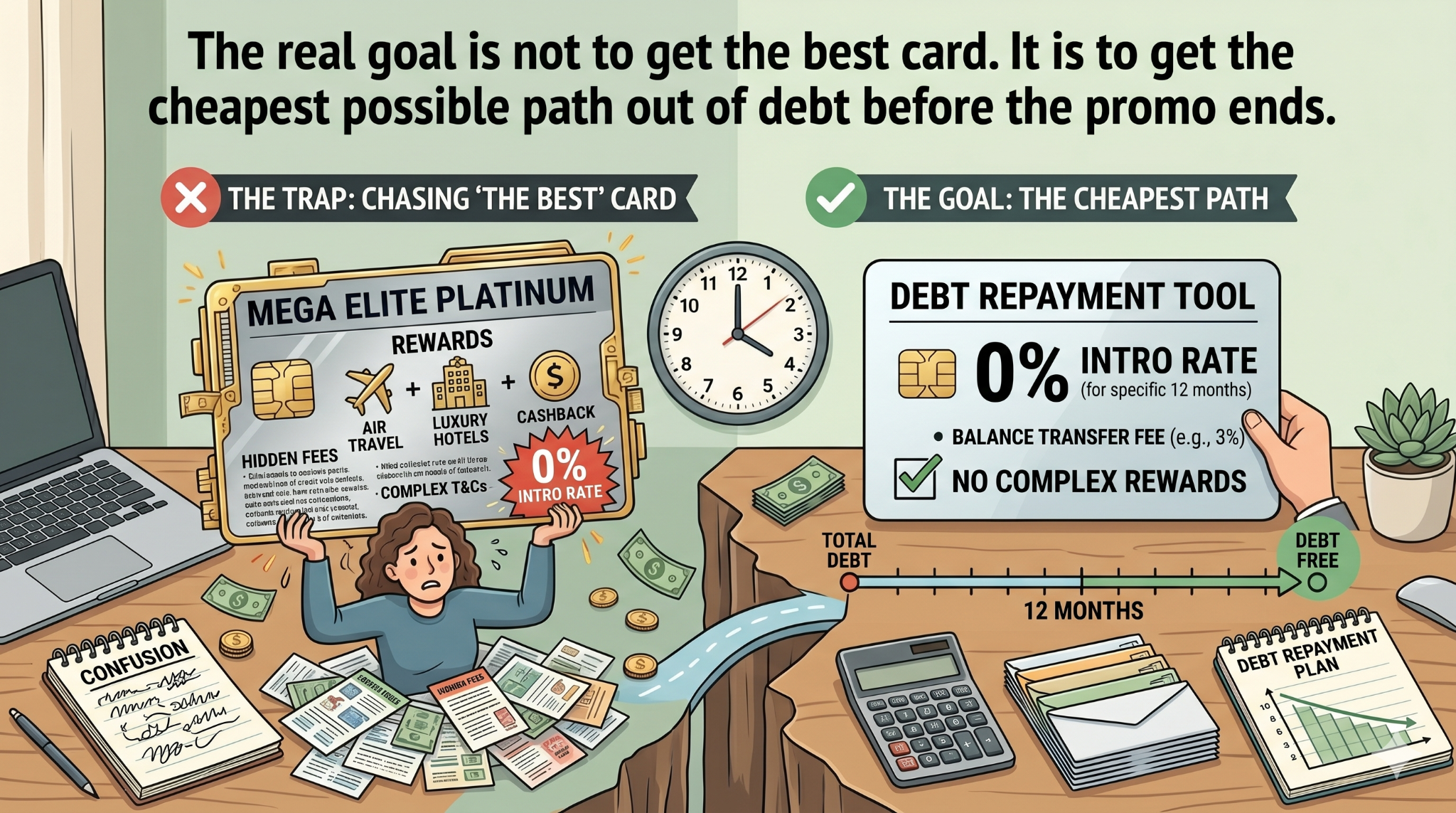
The real goal is not to get the best card. It is to get the cheapest possible path out of debt before the promo ends.
That means the balance transfer fee matters almost as much as the intro APR length. A 3% or 5% fee can still be worth it if the alternative is months of interest, but people hate doing that math because it forces them to admit the card is not free.
The credit card industry loves a temporary miracle with a fee attached.
How this actually works
Balance transfer cards let you move existing credit card debt from one issuer to another, usually onto a card with a 0% introductory APR for a set number of months. During that intro period, more of your payment goes toward principal instead of interest, which is the whole point.
The intro window is the part that matters most. In 2026, some top cards offer around 15 to 21 months of 0% APR, and a few of the stronger options are built specifically for balance transfers rather than rewards. The longer the runway, the more realistic it becomes to actually finish paying the debt before interest comes back.
That sounds obvious, but it is where people get sloppy. They transfer a balance, feel emotionally lighter for a week, then keep paying the old monthly amount they used to pay before the transfer. That is not a strategy. That is just debt wearing a new outfit.
Here is the stuff that actually matters:
Intro APR length. Longer is better if your debt is large or your budget is tight. Short promos can still work, but they give you less room for mistakes.
Balance transfer fee. A 3% fee is much easier to swallow than 5%, especially on larger balances. The fee is the tax you pay for buying time.
Deadline to move the balance. Some cards only give you a few months to complete the transfer and qualify for the promo rate. Miss the deadline and the math gets uglier fast.
Ongoing APR after the promo. If you do not pay off the balance in time, the regular APR kicks in and suddenly the card stops being helpful.
Annual fee. Most strong balance transfer cards in 2026 have no annual fee, which is nice because debt does not need a subscription.
Your actual paydown speed. If you cannot realistically clear the balance during the intro period, the “best” card may just be the least bad one.
The daily-life analogy is simple. A balance transfer card is like getting a payment pause button, not winning a prize. If you use the pause to clean the room, great. If you use it to sit on the couch, the mess is still there.
Comparison
Option
What it actually does
Who it’s for
The catch
Wells Fargo Reflect® Card
Offers one of the longest 0% intro APR periods for purchases and balance transfers.
People who need the most time to pay off debt.
You still need to qualify and pay the transfer fee.
BankAmericard® credit card
Gives a long 0% intro APR window for transfers with no annual fee.
People who want a straightforward no-fee payoff card.
The transfer has to be made within the promo window.
Citi Simplicity® Card
Gives a long 0% intro APR and is designed for fee-averse users.
People who want a clean, no-drama balance transfer setup.
The transfer fee and timing still matter, and rewards are basically nonexistent.
My take: if your balance is big and your budget is tight, pick the longest 0% intro APR you can get with no annual fee. If your debt is smaller and you can realistically crush it in a year or less, a shorter promo with a lower fee may be smarter. Either way, the card is only half the plan; the payment schedule is the other half.
What actually happens when you try this
The first thing people notice is that the application itself is usually straightforward. The annoying part comes after approval, when you realize the transfer has to be timed correctly and the balance transfer fee is real money, not a footnote. A 3% fee on a large balance is still a meaningful chunk of cash.
The thing that surprises most people is how much the promo window changes behavior. When you have 18 or 21 months, the debt suddenly feels possible. That psychological shift is useful, but it can also make people relax too much and spend extra on the old card, which is the exact opposite of what should happen.
When you actually try this, the biggest practical win is that monthly payments stop getting hijacked by interest. If you were paying high APR on a card, a balance transfer can redirect more of your payment toward the balance itself. That is why the total payoff can shrink even if the fee looked annoying upfront.
What nobody warns you about here is that the transfer timing matters more than your enthusiasm. Some cards only give the intro rate if you transfer within a certain number of days or billing cycles. Miss that, and the entire reason you got the card gets weaker.
A pattern I keep seeing is that people choose cards based on the biggest headline number and ignore the fee structure. That is backwards. The right question is not “Which card looks best?” It is “Which card lets me finish the debt for the least total cost?”
The advice everyone gives vs what actually works
“Go with the longest 0% APR.” Usually good advice, but incomplete. A super-long promo is great only if the transfer fee and card terms still make sense for your balance size. If your debt is small and you can pay it off quickly, you may not need the longest runway in the room.
“Always pick the card with no annual fee.” That is often right, but not automatically. An annual fee is only bad if it does not buy you enough value in lower interest or better payoff terms. Most top balance transfer cards in 2026 already have no annual fee, which makes this advice convenient but not magical.
“Transfer everything and close the old card.” That can backfire. Closing the old card can hurt your credit profile, and if the old card had a low utilization or an older account age, you may be making things worse. A better move is to keep the old account open if you can avoid using it.
“Just make the minimum payments and deal with it later.” That is not a plan. That is a delay tactic with interest. Balance transfer cards only work when you intentionally pay more than the minimum and aim to clear the balance before the promo ends.
Calculate your total debt before you apply. Write down the balance, your current APR, and the monthly payment you can realistically afford. Without that number, you are picking a card in the dark, and debt already has enough drama.
Compare fee plus payoff time, not just APR. A 3% transfer fee on a card with 18 or 21 months of 0% APR may save more than a lower-fee card with a shorter promo if your balance is large. The cheapest-looking card is not always the cheapest outcome.
Use the full promo window as your payoff deadline. Divide the balance by the number of months in the intro period, then pay a little extra if you can. That way you are not racing the clock in the final month like it is some kind of financial obstacle course.
Stop using the old card for new spending. If you keep charging the old card while paying off the transferred balance, you are basically chasing your tail. Debt consolidation does not work when the debt keeps reproducing.
Check transfer timing rules before you click apply. Some cards require the balance transfer to happen within 60, 90, or 120 days to get the best intro offer. That detail is annoying, but it is the difference between a good move and an expensive almost-good move.
Make one plan for the whole promo period. Set up autopay, mark the end date, and know exactly how much you need to send each month. If you wait until the promo is almost over, the regular APR will arrive like an unpaid bill with a clipboard.
Questions people actually ask
What is a balance transfer credit card?
It is a card that lets you move debt from one credit card to another, usually at a 0% intro APR for a limited time. The point is to reduce interest so more of your payment goes toward the principal. It is not free money, just cheaper debt for a while.
Are balance transfer cards worth it?
Yes, if you have enough time and discipline to pay the debt down during the promo period. They are especially useful when your current card APR is high and your payoff plan is realistic. If you just move debt around and keep spending, they stop being useful pretty fast.
What credit score do you need for a balance transfer card?
Usually good to excellent credit. Many of the strongest 0% intro APR cards in 2026 are aimed at people with solid credit profiles, not just anyone with a pulse and a balance. If your score is weak, you may still qualify for some offers, but the best ones are less likely.
Is a 0% APR balance transfer really 0%?
For the promo period, yes, on qualifying transfers. But you still usually pay a balance transfer fee, and if you miss the promo deadline or do not pay off the balance in time, the regular APR kicks in afterward. So the interest is gone for a while, not forever.
Which is better: 15 months or 21 months?
Usually 21 months, if the transfer fee and card terms are reasonable. More time gives you a bigger margin for real life, which has a weird habit of showing up uninvited. If you can pay the debt faster, a shorter promo may still be fine.
Should I transfer my whole balance?
Only if the credit limit and card rules allow it and the math still works. Some people split balances across more than one card, but that can get messy fast. The cleanest setup is the one you can actually pay off on schedule.
Do balance transfer cards hurt your credit?
They can cause a small temporary change because of the application and new account, but the larger effect depends on how you use the card. If the transfer helps you pay down debt and avoid missed payments, that often helps more than the short-term hit. The real danger is adding more debt after the transfer.
Can I use a balance transfer card for new purchases?
Sometimes the card allows purchases, but that is usually not the smart play. New purchases can come with their own APR rules and make the payoff plan harder to manage. If the goal is debt payoff, keep the card focused on the transfer.
So where does this leave you
If your goal is to pay off debt faster in 2026, the smartest balance transfer card is the one that gives you enough time and costs the least to move the balance. For many people, that means a no-annual-fee card with a long intro APR window, like Wells Fargo Reflect, BankAmericard, Citi Simplicity, or Citi Diamond Preferred.
But the card is not the plan. The plan is the monthly payment schedule you can actually stick to. If you do not use the promo period to shrink the balance hard, the low-interest window just becomes a delay button.
One concrete thing to do today: write down your current balance, current APR, and the number of months you would need to pay it off if interest disappeared. That number tells you whether a balance transfer card is a smart move or just a prettier version of the same problem.
Conclusion
You made it through the debt shuffle, which is more useful than pretending high-interest balances will vanish on their own. The basic truth is pretty simple: balance transfer cards work when they buy you time and you use that time well.
The line to remember is this: a balance transfer is only a win if the debt is actually smaller when the promo ends. That is the part people skip when they are busy admiring the 0% APR headline.